Welcome to our curated guide on bandaneira diving — the definitive resource for premium options across Indonesia.
Banda Neira Diving: Where History and Marine Wonders Collide
Immerse yourself in a destination where the echoes of the spice trade enrich every underwater encounter. Banda Neira diving offers more than just spectacular reefs; it is a journey into the heart of Indonesia’s colonial past, set against a backdrop of volcanic islands and legendary waters. Here, pristine coral gardens flourish on recent lava flows, schools of hammerheads patrol deep-water channels, and centuries-old forts stand silent guard over the world’s most coveted spices.
The Allure of the Spice Islands: A Living History
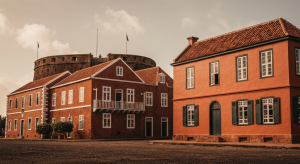
For centuries, the Banda Islands were the world’s sole source of nutmeg and mace, spices once more valuable than gold. This immense wealth drew European powers into a fierce and often brutal competition for control, culminating in the dominance of the Dutch East India Company (VOC). The legacy of this era is etched into the very fabric of Banda Neira, the archipelago’s main settlement. Stately colonial mansions with their wide verandas line the quiet streets, and the imposing walls of Dutch forts dominate the skyline, their cannons still aimed at the harbour entrance.
This history is not confined to museums. It is a living, breathing part of the islands. On the island of Lonthor, ancient nutmeg groves, established under the VOC’s brutal plantation system, are still tended by local families. The air is fragrant with the scent of drying mace. This palpable sense of the past sets the stage for a truly unique travel experience. It provides a profound context for the adventure that awaits, transforming a simple holiday into an exploration of a place that shaped global trade and history. The isolation that once protected its spice monopoly now preserves its unparalleled marine biodiversity.
World-Class Diving in Banda Neira: A Pelagic and Macro Paradise
The underwater realm of the Banda Sea is as rich and dramatic as the history on its shores. The convergence of deep oceanic trenches and volcanic geology creates a marine ecosystem of extraordinary diversity. The remoteness of the archipelago has shielded its reefs from the pressures of mass tourism, resulting in a vibrant, healthy, and often surprising underwater environment. For the discerning diver, Banda Neira diving presents a rare combination of thrilling pelagic encounters, unique geological dive sites, and flourishing coral ecosystems teeming with macro life.
The Lava Flow of Gunung Api
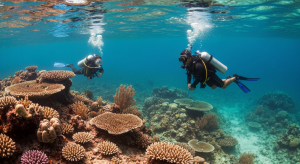
In 1988, the volcano of Gunung Api erupted, sending a river of molten lava into the sea. From this destruction, a miracle of marine regeneration occurred. Today, the solidified lava flow is one of Banda Neira’s most celebrated dive sites. In just a few decades, it has been completely colonised by a breathtaking field of hard corals, predominantly table and branching Acropora. The speed and extent of this coral growth have fascinated marine biologists, creating a vast, uniform garden that is unlike any other reef structure. Diving here feels like flying over an endless, intricate carpet of coral, patrolled by schools of fusiliers and curious Napoleon wrasse.
Hammerhead Season: A Pelagic Spectacle
Between September and November, the waters surrounding the Banda Islands become a gathering point for one of the ocean’s most impressive sights: schooling scalloped hammerhead sharks. The deep, nutrient-rich waters that well up from the Banda Trench attract these majestic predators in significant numbers. Sites like Batu Kapal and the seaward side of Pulau Hatta offer the best chances for an encounter. Drifting in the blue, watching dozens, sometimes hundreds, of these iconic sharks cruise effortlessly in the depths is a humbling and unforgettable highlight of any Banda Neira diving expedition. It is a spectacle that draws experienced divers from across the globe.
Pristine Reefs and Macro Wonders
Beyond the signature sites, the archipelago is dotted with world-class reefs. The islands of Hatta, Ai, and Run are fringed by spectacular vertical walls, adorned with enormous sea fans and vibrant soft corals. These walls plunge into the abyss, their crevices and overhangs providing shelter for a huge variety of reef fish, moray eels, and turtles. For macro enthusiasts, the harbour in Banda Neira itself offers a fantastic muck diving experience, particularly at dusk when the elusive mandarinfish perform their nightly mating dance. Pygmy seahorses, ghost pipefish, and a plethora of rare nudibranchs can be found by those with a keen eye, proving that Banda’s treasures come in all sizes.
A Journey Through Colonial History: Forts and Forgotten Empires
To truly appreciate Banda Neira, one must walk its storied land as well as dive its waters. A topside exploration is a journey back in time. The most prominent landmark is Fort Belgica, a pentagonal fortress impeccably restored by UNESCO, which stands sentinel on a hill above Neira town. From its ramparts, the panoramic view of the harbour, Gunung Api, and the island of Lonthor is magnificent. It is easy to imagine Dutch soldiers scanning the horizon for rival ships, protecting the VOC’s immensely profitable monopoly.
Below Fort Belgica lies the older Fort Nassau, the first permanent Dutch structure in the islands. Between them, the town unfolds with its unique blend of colonial Dutch architecture and local island life. A walk through the streets reveals historic homes, the old governor’s palace, and a church dating back to the 19th century. Each building tells a story of conquest, trade, and cultural exchange. Our curated land tours, led by knowledgeable local guides, connect the dots between the ruins of the past and the vibrant community of today, ensuring your understanding of Banda Neira is as deep as your dives.
Beyond the Reefs: Nutmeg Plantations and Island Life
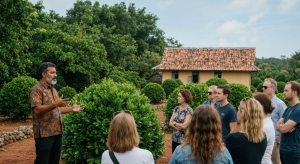
The source of Banda’s fame and fortune—nutmeg—is still central to its identity. A short boat ride across the channel to Lonthor (also known as Banda Besar, or Great Banda) allows for a visit to a working nutmeg plantation. Walking under the cool canopy of the ancient Kenari trees that shade the nutmeg, you will learn about the cultivation of this unique ‘fruit of two spices’. The bright red mace is carefully peeled away from the nutmeg seed, and both are dried in the sun. The process has changed little over the centuries.
This experience offers a powerful connection to the history of the islands and the global economy it influenced. It is also an opportunity to engage with the gentle rhythm of modern Bandanese life. The people are warm and welcoming, proud of their unique heritage. Exploring the quiet villages, sampling local delicacies, and simply watching the sunset over the volcano provides a perfect, tranquil balance to the adventure of a Banda Neira diving trip. It is this combination of underwater exhilaration and profound cultural immersion that defines the Banda Neira experience.
Planning Your Banda Neira Diving Expedition
Reaching a destination as remote and rewarding as the Banda Islands requires careful planning, a process we specialise in guiding our clients through. The journey is part of the adventure, underscoring the archipelago’s pristine isolation. The primary route is via Ambon, the provincial capital of Maluku, which is served by flights from major Indonesian hubs like Jakarta and Bali. From Ambon, a small propeller plane or a multi-hour fast ferry completes the final leg to Banda Neira.
The diving season is dictated by the monsoons. The two optimal windows are from March to April and from mid-September to early December. During these periods, the seas are calmest, and visibility is at its best, often exceeding 30 metres. The September-to-November window is particularly sought after as it coincides with the hammerhead shark aggregation. Given the limited infrastructure and the high demand during peak season, we recommend booking well in advance. Our approach involves coordinating with thoroughly vetted local operators and accommodations to ensure every logistical detail, from transfers to dive schedules, is seamlessly managed, allowing you to focus entirely on the remarkable experience ahead.
Frequently Asked Questions about Diving in Banda Neira
What is the best time of year to go diving in Banda Neira?
The prime diving seasons are March-April and September-November. These periods fall between the monsoons, offering the calmest seas, sunniest weather, and best underwater visibility, which can often reach 30-40 metres. The September-November window is especially popular as it is the peak season for spotting large schools of scalloped hammerhead sharks. Booking your trip during these times ensures the most favourable conditions for both diving and island exploration.
What level of diving experience is required?
Banda Neira diving is suitable for advanced divers. Many of the premier sites, especially those for hammerhead encounters, are deep and can have strong currents. Divers should be comfortable with drift diving and managing their buoyancy in variable conditions. While there are calmer, shallower sites suitable for less experienced divers, to fully appreciate the region’s offerings, an Advanced Open Water certification with a good number of logged dives is highly recommended for safety and enjoyment.
What are the water temperatures and what wetsuit should I bring?
Water temperatures in the Banda Sea are consistently warm, typically ranging from 27°C to 29°C (80°F to 84°F). Most divers find a 3mm full-length wetsuit to be perfectly comfortable for multiple dives a day. Some divers who are less sensitive to cold may even opt for a shorty or just a rash vest and shorts. However, a 3mm suit provides good thermal insulation and protection from the sun and any potential scrapes.
Besides hammerheads, what other large marine life can be seen?
While hammerheads are a major draw, Banda’s waters are rich with other pelagic species. Divers frequently encounter large Napoleon wrasse, giant trevally, schools of barracuda, and several species of reef sharks, including blacktip and whitetip sharks. Manta rays and eagle rays are also seen, though less predictably. On occasion, lucky divers might spot dolphins from the boat or even a passing whale shark, especially during the plankton-rich months.
How do I get to the Banda Islands?
The journey begins with a flight to Ambon’s Pattimura Airport (AMQ) from major Indonesian cities like Jakarta (CGK) or Bali (DPS). From Ambon, you have two options to reach Banda Neira: a small commercial flight (which can have an unreliable schedule) or the fast ferry. The ferry is the more common and reliable option, taking approximately 5-6 hours. We assist all our clients in navigating these local travel logistics to ensure a smooth transit.
What is the accommodation like in Banda Neira?
Accommodation in Banda Neira consists primarily of charming, locally-run guesthouses and a few small hotels, many of which are housed in restored colonial-era buildings. The style is comfortable and characterful rather than overtly luxurious. Expect clean rooms, friendly service, and an authentic atmosphere. We select our accommodation partners based on their quality, location, and commitment to guest comfort, ensuring a pleasant and immersive stay on the island.
Is there mobile phone signal and internet access?
Mobile phone signal from the main Indonesian provider, Telkomsel, is generally available in and around Neira town, but it can be intermittent and slow, especially for data. Wi-Fi is available at some guesthouses and cafes but is often unreliable and not suitable for heavy usage like streaming or large downloads. It is best to consider yourself partially disconnected, which adds to the charm of this remote destination.
What currency should I bring?
The local currency is the Indonesian Rupiah (IDR). It is essential to bring sufficient cash with you from a major city like Ambon, as there is only one ATM on Banda Neira and it is frequently out of service or may not accept foreign cards. While some larger guesthouses and dive operators may accept credit cards, many smaller establishments, local eateries, and shops are cash-only. Planning your cash needs in advance is crucial.
Are there any health precautions I should take?
It is advisable to consult your doctor or a travel clinic for the latest health recommendations for travel to remote Indonesia. Standard vaccinations should be up to date. While Banda Neira is not a high-risk malaria zone, mosquito-borne illnesses are present in the region, so using insect repellent is recommended, particularly at dawn and dusk. A small personal medical kit with basic first-aid supplies, antiseptic, and any personal medications is also a wise precaution.
What can I do on non-diving days?
Banda Neira offers a wealth of topside activities. You can explore the historic Fort Belgica and Fort Nassau, take a guided tour of a nutmeg plantation on Lonthor island, or hike to the summit of the Gunung Api volcano for a spectacular sunrise view. Simply walking through Neira town, visiting the local market, and enjoying the relaxed pace of island life is a rewarding experience in itself. The blend of history, culture, and nature provides plenty to do.
Begin Your Journey to the Historic Spice Islands
A Banda Neira diving expedition is an investment in an experience that resonates long after you surface. It is a rare opportunity to explore a corner of the world where nature and history are deeply intertwined. To discuss a curated itinerary tailored to your interests, please contact our specialists by email at bd@juaraholding.com or via WhatsApp at +62 811-3941-4563.