Banda Neira Diving: A Journey Through Time, Spice, and Sea
In the vast blue of the Banda Sea lies an archipelago where history is not confined to museums. It lingers in the air, scented with nutmeg and cloves. The Banda Islands, the fabled Spice Islands of antiquity, offer more than just a destination; they provide an immersion. For the discerning traveller, this is where world-class underwater exploration meets a profound historical narrative. Welcome to the world of Banda Neira diving, a journey into the heart of Maluku’s living past.
The Spice Islands’ Enduring Allure
For centuries, the global powers of the day vied for control of this tiny cluster of volcanic islands. This was the world’s only source of nutmeg and mace, spices worth more than their weight in gold. The Dutch East India Company (VOC) eventually seized control, building a mercantile empire on the back of this monopoly, an era of immense wealth and brutal subjugation. The legacy of this period is etched into the very landscape of Banda Neira, Lonthor, and the surrounding isles.
Walking through the quiet streets of Banda Neira town, you are tracing the footsteps of Dutch governors, spice traders, and exiled Indonesian nationalists. The air is thick with stories. You can feel the weight of this history in the crumbling walls of colonial mansions and the silent cannons of the forts that still watch over the harbour. It is this unique, palpable sense of the past, combined with the islands’ spectacular natural beauty, that makes a visit here so compelling. It is an experience that transcends a simple holiday.
Diving Banda Neira: Beneath the Volcano’s Shadow
The same volcanic forces that created these fertile islands also shaped a truly spectacular underwater world. The centrepiece is Gunung Api, the ‘Fire Mountain’, a volcano that rises directly from the sea. Its dramatic 1988 eruption, while destructive on land, created one of the world’s most unique marine ecosystems. Lava flows that once scorched the earth now form the foundation for astonishingly vibrant coral gardens. The speed of regrowth here has fascinated marine biologists for decades.
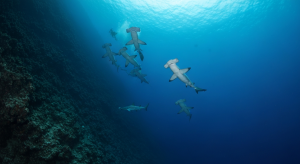
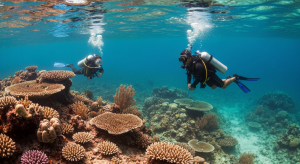
Diving these lava flows is an otherworldly experience. Hard corals have colonised the solidified magma in a riot of colour and form, creating a complex topography of ridges and valleys teeming with life. But the underwater appeal of the Bandas extends far beyond this single phenomenon. The islands of Hatta and Ai offer breathtaking wall dives, where the reef plummets into the deep blue, patrolled by Napoleon wrasse, eagle rays, and vast schools of fusiliers. It is in these deep waters, particularly during the right season, that the ultimate prize of Banda Neira diving often appears: schooling scalloped hammerhead sharks, a truly humbling sight for any diver.
The biodiversity is staggering. From the minute, jewel-like mandarin fish performing their twilight mating dance in the harbour to the immense dogtooth tuna hunting in the currents, the variety is endless. The combination of pristine reefs, dramatic volcanic seascapes, and consistent pelagic encounters solidifies the Banda Islands’ reputation as a premier global diving destination.
A Living History: Forts, Plantations, and Colonial Echoes
A journey to Banda Neira is incomplete without exploring its topside heritage. The experience on land is as rich and vital as the one beneath the waves. Dominating the town is the magnificently restored Fort Belgica, a pentagonal fortress built by the VOC in the 17th century. Climbing its ramparts at sunset offers a panoramic view of the harbour, Gunung Api, and the island of Lonthor, allowing you to appreciate the strategic genius—and colonial ambition—of its builders.
Beyond the forts, the history of the spice trade continues in the shaded nutmeg plantations, known locally as perken. Here, ancient trees grow beneath the canopy of towering Kenari trees, their fruit still harvested by hand. A guided walk through these plantations is a sensory journey, connecting you directly to the source of the islands’ fame and fortune. You can see the mace, a brilliant red lattice, encasing the nutmeg seed, and understand firsthand the prize that drove nations to war.
The town itself is a living museum, with its elegant Dutch colonial architecture, the former Governor’s Palace, and historic churches. This is not a curated exhibit but a community living amidst the relics of a global epic. This seamless blend of past and present is what makes exploring Banda Neira so uniquely rewarding.
The Banda Neira Diving Experience: Beyond the Reef
We believe that a trip to a destination this significant requires more than just a standard dive plan. It demands a curated approach that honours both its natural wonders and its complex history. Our philosophy is built on providing an intelligent, seamless, and deeply enriching experience. This begins with our guides, who are not only expert PADI-certified divemasters with an intimate knowledge of the local currents and marine life, but also passionate storytellers versed in the islands’ history.
Every itinerary we design is a carefully balanced composition of underwater exploration and cultural immersion. We blend thrilling dives at sites like the Gunung Api lava flows and the hammerhead points off Pulau Ai with insightful land tours to Fort Belgica and private nutmeg plantations. Our editorial standards for trip planning mean we vet every partner and every element of the journey, ensuring comfort, safety, and authenticity. We handle the complex logistics of reaching this remote archipelago, allowing you to focus entirely on the profound experience of being there.
This commitment to quality ensures that your Banda Neira diving expedition is not merely a series of dives, but a coherent narrative. It is a journey that engages the mind as much as it thrills the senses, leaving you with a deep appreciation for this remarkable corner of the world.
Planning Your Expedition to the Bandas
The remote location of the Banda Islands is integral to their pristine condition and untouched charm. Reaching them requires careful planning. The primary gateway is Ambon, the provincial capital of Maluku, which is served by flights from major Indonesian hubs like Jakarta and Bali. From Ambon, the final leg of the journey is typically by fast ferry or a small propeller plane, both of which are subject to weather and seasonal schedules.
The optimal seasons for Banda Neira diving are generally from March to April and from September to early December. During these periods, the seas are at their calmest, and underwater visibility is at its peak, often exceeding 30 metres. This is also the prime time for encountering the famed schools of hammerhead sharks in the deeper waters. Planning well in advance is essential, not only for securing travel but also for ensuring the availability of the best guides and accommodation in this exclusive destination.
Banda Neira Diving FAQ
What is the best time of year to dive in Banda Neira?
The prime diving seasons are March-April and September-December. During these windows, the seas are typically calm, and underwater visibility is excellent. These periods also offer the best chance of encountering large schools of scalloped hammerhead sharks. The monsoon season, from May to August, brings rougher seas and is generally avoided by dive operators.
Are the Banda Islands suitable for beginner divers?
While Banda offers many challenging dives for experienced divers, there are also numerous sheltered sites with minimal current that are perfect for beginners. The house reef in front of Banda Neira and certain sites along the lava flows offer calm conditions and abundant life. We can tailor itineraries to suit all experience levels, ensuring a safe and enjoyable experience.
What are the ‘must-do’ dives in Banda Neira?
No trip is complete without diving the Lava Flows of Gunung Api to witness the incredible coral regrowth. Batu Kapal is renowned for its dramatic topography and pelagic action. For advanced divers, the deep walls of Pulau Hatta and Pulau Ai are essential, offering the best chance to see schooling hammerheads. The pier dive for mandarin fish at sunset is another iconic experience.
What is the water temperature and what exposure suit do I need?
Water temperatures in the Banda Sea are consistently warm, typically ranging from 27°C to 29°C (80°F to 84°F). For most divers, a 3mm full-length wetsuit is perfectly adequate for comfort and protection. Some divers who are prone to feeling the cold may prefer a 5mm suit, especially for multiple dives over several days.
What marine life is Banda Neira famous for?
Banda Neira is most famous for its seasonal aggregations of scalloped hammerhead sharks. Beyond that, it boasts incredible biodiversity, including Napoleon wrasse, giant trevally, dogtooth tuna, eagle rays, and several species of turtle. The macro life is also superb, with highlights like the iconic mandarin fish, pygmy seahorses, and a vast array of nudibranchs.
Besides diving, what are the main attractions?
The historical significance of the islands is a major draw. Key attractions include exploring the 17th-century Dutch forts, particularly Fort Belgica, visiting active nutmeg plantations to see the spice harvesting process, and simply walking through the colonial-era streets of Banda Neira town. The local culture, food, and stunning volcanic landscapes are also captivating.
How do I get to the Banda Islands?
The journey involves flying to Ambon (AMQ) from a major Indonesian city like Jakarta (CGK) or Denpasar (DPS). From Ambon, you can take a multi-hour fast ferry or a small domestic flight to Banda Neira. Logistics can be complex and schedules can change, which is why using an experienced operator to manage your travel arrangements is highly recommended.
What currency is used and are credit cards accepted?
The local currency is the Indonesian Rupiah (IDR). It is essential to bring sufficient cash with you, as there are very few ATMs in the Banda Islands, and they are not always reliable. While some high-end hotels may accept credit cards, most local guesthouses, restaurants, and shops operate on a cash-only basis.
Is there reliable internet and phone signal?
Connectivity in the Banda Islands is limited. You can expect a basic mobile signal (Telkomsel generally works best) in and around Banda Neira town, but it can be slow and unreliable for data. Wi-Fi is available at some hotels but is often very slow. It is best to plan for a digital detox and inform others you will have limited connectivity.
What kind of accommodation is available?
Accommodation ranges from simple local guesthouses (losmen) to more comfortable boutique hotels, many of which are housed in restored colonial buildings. Options are limited, especially during peak diving season, so booking far in advance is crucial to secure the best rooms that meet international standards of comfort and service.
What should I pack for a trip to Banda Neira?
Aside from your dive gear, pack lightweight clothing, reef-safe sunscreen, a hat, and insect repellent. Bring sturdy footwear for walking around the forts and plantations. It is also wise to pack any personal medications, a basic first-aid kit, and a good book for relaxing evenings, as the nightlife is very quiet.
Begin Your Journey into History
The Banda Islands offer an experience that resonates long after you return home. It is a rare blend of adventure, discovery, and quiet reflection. To begin crafting your bespoke Banda Neira diving expedition, we invite you to contact our specialists. Let us handle the intricate details of your journey into the heart of the Spice Islands. For a detailed consultation, please reach out via email to bd@juaraholding.com or message us on WhatsApp at +62 811-3941-4563.