Banda Neira Diving: Where History and Hammerheads Collide
In the heart of Indonesia’s Maluku archipelago lies an echo of the past, a place where the scent of nutmeg still hangs in the air and colonial forts stand silent guard over a turquoise sea. This is the Banda Islands, a destination that offers some of the world’s most extraordinary diving. For the discerning traveller, Banda Neira diving is not merely an underwater excursion; it is a profound journey into a world where vibrant marine ecosystems thrive alongside a deep, complex, and compelling history.
The Lure of the Spice Islands: A Diver’s Introduction
For centuries, the Banda Islands were the world’s sole source of nutmeg and mace, spices once more valuable than gold. This monopoly sparked wars, built empires, and drew adventurers and merchants from across the globe. Today, that same magnetic pull attracts a different kind of explorer: the diver seeking unparalleled underwater realms. The remoteness that once protected the islands’ spice trade now preserves their marine biodiversity, creating a sanctuary of pristine coral gardens, dramatic volcanic seascapes, and thrilling encounters with large pelagic species.
To embark on a Banda Neira diving trip is to step back in time. The archipelago, a cluster of volcanic islands including the main hub of Neira, the large island of Lonthor (or Banda Besar), and the outlying gems of Ai, Run, and Hatta, remains remarkably untouched by mass tourism. The pace of life is slow, dictated by the sea and the seasons. Above the water, the legacy of Dutch, British, and Portuguese influence is etched into the architecture and culture. Below, the Banda Sea reveals its true treasures—a world-class diving destination that offers a rare combination of historical depth and natural wonder.
Our philosophy at Banda Neira Diving is rooted in this unique duality. We believe the experience is richer when you understand the context. Each dive is curated not just for its marine spectacle but also for its connection to the story of this place. From the vibrant reefs of Pulau Hatta to the historic waters off Pulau Run—the island famously traded for Manhattan—every descent is part of a larger, more captivating narrative.
Beneath the Volcano: Diving Gunung Api’s Lava Flows
Dominating the skyline of the central islands is Gunung Api, the “Fire Mountain,” an active volcano that is both a breathtaking landmark and the architect of one of the world’s most unique dive sites. In 1988, the volcano erupted, sending rivers of molten lava pouring into the sea. This destructive event, in a stunning display of nature’s resilience, created a foundation for rebirth. The sterilised rock became a blank canvas upon which a new coral ecosystem has flourished with astonishing speed and density.
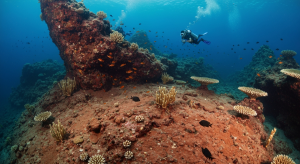
Diving the lava flows of Gunung Api is an otherworldly experience. The topography is unlike any other reef; you are swimming over solidified rivers of black rock, now completely carpeted in a breathtaking expanse of hard corals. Fields of staghorn and table corals stretch as far as the eye can see, creating an intricate, multi-layered cityscape of marine life. The speed of this colonisation has fascinated marine biologists and provides divers with a spectacle of unparalleled coral health and vibrancy. The contrast between the dark volcanic substrate and the brilliant colours of the coral is visually stunning.
These sites are not just about the coral. The rich structures provide a haven for a vast array of reef fish. Swarms of anthias and damselfish pulse above the coral heads, while moray eels peer from crevices and schools of fusiliers stream past in the blue. It is a testament to the raw power of nature, a living laboratory of ecological succession that makes Banda Neira diving a truly singular pursuit.
Hammerhead Season: The Deep Blue Spectacle
While the reefs offer endless fascination, for many, the ultimate prize of Banda Neira diving is the chance to witness one of the ocean’s most majestic spectacles: schooling scalloped hammerhead sharks. During specific times of the year, typically from September to early November, the currents and cooler waters of the Banda Sea attract these enigmatic predators in significant numbers. They congregate in the deep, open water, often just off the steep drop-offs that surround the islands.
Encounters are most common in the blue, away from the reef’s edge. Dives are often planned to drift in deep water, with divers maintaining a specific depth while scanning the seemingly endless expanse. The anticipation is palpable. Then, out of the deep blue, a silhouette appears, then another, and another, until the grand procession materialises. Seeing a school of dozens, sometimes hundreds, of hammerheads moving with synchronised, powerful grace is an experience that stays with a diver forever. It is a humbling and profound connection to the wild, untamed heart of the ocean.
It is important to approach these dives with respect and the right mindset. These are wild animals in their natural environment, and sightings are a privilege, not a guarantee. The conditions can be challenging, often involving strong currents and deep profiles, making these dives best suited for experienced divers. Our guides are experts in reading the conditions and maximising the chances of a safe and successful encounter, ensuring that the pursuit of this incredible spectacle is conducted with the utmost professionalism and regard for the marine environment.
A Living Museum: Colonial History Above the Waves
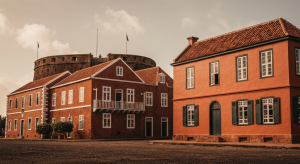
The Banda Neira diving experience extends far beyond the water’s edge. The islands are steeped in a history that is both fascinating and tragic. A walk through the quiet streets of Banda Neira town is a journey through the annals of the spice trade. The elegant, slightly faded Dutch colonial mansions stand as reminders of the immense wealth extracted from this tiny archipelago. The centrepiece of this historical landscape is Fort Belgica, a formidable pentagonal fortress built by the Dutch East India Company (VOC) in the 17th century. Lovingly restored, it offers panoramic views of the harbour, Gunung Api, and the island of Lonthor.
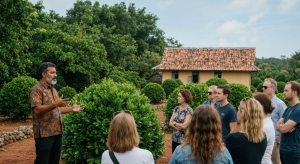
Exploring this history is essential to understanding the soul of Banda. We encourage our guests to spend time on land, visiting not only Fort Belgica but also the nearby Fort Nassau, the governor’s palace, and the old church. A short boat ride across the channel lies Lonthor, the largest of the islands, where you can walk through shaded, centuries-old nutmeg plantations. Here, beneath the canopy of the Kenari trees that protect the delicate nutmeg, one can learn about the brutal ‘Perkenier’ system and the violent history of the Dutch conquest.
This topside exploration provides a powerful context for the pristine beauty found underwater. It fosters a deeper appreciation for the resilience of both the local culture and the natural environment. It is this combination of world-class diving and rich, accessible history that elevates a trip to the Banda Islands from a simple holiday to a truly immersive and educational journey.
Beyond the Big Pelagics: Macro Wonders and Pristine Reefs
While hammerheads and volcanic seascapes often claim the spotlight, the sheer quality and diversity of the reefs throughout the Banda archipelago are a primary attraction in their own right. The islands of Hatta, Ai, and Run, located further out in the Banda Sea, boast some of the most vibrant and healthy coral walls in Indonesia. Visibility is often exceptional, revealing sheer drop-offs adorned with enormous sea fans, barrel sponges, and a kaleidoscope of soft corals.
These reefs are teeming with life. Large schools of jacks, barracuda, and red-toothed triggerfish are common sights, as are Napoleon wrasse and resident sea turtles. The currents that bring the pelagics also nourish the reef, resulting in an ecosystem bursting with energy. Sites like Batu Kapal and the walls of Pulau Hatta are a testament to the benefits of remoteness, showing what a coral reef can be when protected from the pressures of coastal development and overfishing.
The macro life is equally rewarding for those with a keen eye. A twilight dive in the main harbour can reveal the famously elusive mandarinfish performing their nightly mating dance. Ambon scorpionfish, ghost pipefish, and a variety of colourful nudibranchs can be found by experienced guides who know their habitats. This incredible biodiversity, from the largest sharks to the smallest crustaceans, ensures that every single dive in the Banda Islands offers the potential for discovery.
Planning Your Banda Neira Diving Expedition
A journey to the Banda Islands requires a degree of planning, but the rewards are immeasurable. The destination’s remoteness is a core part of its charm. The primary diving seasons are dictated by the monsoons, with the best conditions typically found from March to April and again from September to November. These windows offer the calmest seas, best visibility, and, in the later season, the highest probability of hammerhead encounters.
Travel usually involves flying to Ambon, the provincial capital of Maluku, which is well-connected to major Indonesian hubs like Jakarta and Bali. From Ambon, the final leg to Banda Neira can be completed by a small propeller plane or a multi-hour public ferry. Logistics can change, and having a reliable partner on the ground is invaluable. At Banda Neira Diving, we provide our clients with the most current and reliable travel information, drawing on years of practical, on-the-ground experience to ensure a smooth journey.
We specialise in crafting seamless itineraries that blend exceptional diving with cultural and historical exploration. Our operational standards are rigorous, prioritising safety, small group sizes, and a deep respect for the local environment and community. We partner only with vetted local guides and services that meet our editorial standards for quality and authenticity, ensuring your expedition is not just a holiday, but a thoughtfully curated experience of this remarkable corner of the world.
Frequently Asked Questions about Banda Neira Diving
What is the best time of year to dive in Banda Neira?
The two primary diving seasons are March-April and September-November. These periods fall between the monsoons, offering the calmest seas and best underwater visibility, often exceeding 30 metres. The September to November window is particularly famous as it coincides with the peak season for spotting schools of scalloped hammerhead sharks in the deep waters surrounding the islands. Both seasons, however, offer spectacular reef diving and pleasant weather for topside exploration of the historical sites.
What level of diving experience is required?
Banda Neira offers dive sites suitable for various levels. Many of the reef and lava flow dives are accessible to Open Water divers with good buoyancy. However, to fully appreciate the destination, an Advanced Open Water certification is highly recommended. Some of the most rewarding sites, particularly those for hammerhead encounters, can involve strong currents, deep profiles, and blue-water diving, making them appropriate only for experienced divers with a significant number of logged dives.
What is the water temperature and what exposure suit should I bring?
Water temperatures in the Banda Sea are consistently warm, typically ranging from 27°C to 29°C (80°F to 84°F). Most divers find a 3mm full-length wetsuit to be perfectly comfortable for multiple dives a day. Some divers who are less sensitive to cold may even opt for a shorty or just a rash guard and shorts. However, a 3mm suit provides a good balance of thermal protection and defence against scrapes or stings.
Besides diving, what other activities are available?
The historical and cultural attractions are a major part of the Banda experience. You can explore the 17th-century Dutch colonial architecture, visit the impressive Fort Belgica and Fort Nassau, and walk through active nutmeg plantations on Lonthor island. Hiking up Gunung Api volcano offers a challenging but rewarding trek with incredible views. Snorkelling is also excellent in many locations, and simply experiencing the tranquil pace of island life is an activity in itself.
How do I get to the Banda Islands?
The journey is part of the adventure. The typical route is to fly into Ambon’s Pattimura Airport (AMQ) from a major Indonesian city like Jakarta (CGK) or Makassar (UPG). From Ambon, you can take a small domestic flight (subject to schedules) or the overnight public ferry to Banda Neira. We advise all our clients on the latest and most reliable transport options to ensure the connection is as smooth as possible.
What kind of marine life can I expect to see?
The biodiversity is staggering. Besides the famous schools of hammerhead sharks, you can expect to see large pelagics like dogtooth tuna, giant trevally, and mobula rays. Reef sharks and turtles are very common. The pristine reefs are home to vast schools of fusiliers, surgeonfish, and bannerfish. For macro enthusiasts, there are mandarinfish, pygmy seahorses, various nudibranchs, and countless species of reef fish and invertebrates, making it a complete underwater ecosystem.
Is Banda Neira a good destination for non-divers?
Absolutely. While diving is the primary draw, the islands are a paradise for history enthusiasts, photographers, and those seeking a tranquil escape. The rich colonial history, the unique spice plantation culture, the stunning volcanic landscapes, and the friendly local communities offer a full and fascinating travel experience. Non-divers can enjoy snorkelling, hiking, historical tours, and simply soaking in the unique atmosphere of this remote archipelago.
What currency is used and are there ATMs?
The local currency is the Indonesian Rupiah (IDR). It is highly recommended to bring sufficient cash with you from a major city like Ambon. While there is an ATM in Banda Neira, its reliability can be inconsistent, and it may not accept all international cards. Some larger guesthouses and dive operators may accept card payments, but cash remains the primary mode of transaction for local shops, restaurants, and tours.
What is the food like in the Banda Islands?
The local cuisine is a delicious reflection of its history and geography. Fresh fish is a staple, often grilled (ikan bakar) and served with rice and a fiery chili condiment called ‘sambal’. The influence of the spice trade is evident, with dishes subtly flavoured with fresh nutmeg, mace, and cloves. You can also find Indonesian classics like ‘nasi goreng’ (fried rice). Trying nutmeg jam, a local speciality, is a must.
Are the dive sites crowded?
One of the greatest appeals of Banda Neira diving is the lack of crowds. Due to its remote location, the number of visiting divers at any given time is very small. It is common to be the only dive boat at a site, allowing for a peaceful and intimate underwater experience. This exclusivity contributes to the feeling of genuine exploration and allows for pristine conditions on the reefs, undisturbed by heavy diver traffic.
Begin Your Journey to the Spice Islands
The Banda Islands offer a rare confluence of profound history and spectacular nature. If you are ready to experience a destination that engages the mind as much as it thrills the senses, we invite you to begin a conversation with us. To discuss a personalised Banda Neira diving itinerary, please contact our specialists by email at bd@juaraholding.com or via WhatsApp at +62 811-3941-4563.