What is the Best Time of Year for Diving Bandaneira?
- These windows offer the calmest sea conditions and highest water visibility, frequently exceeding 30 meters.
- Water temperatures are consistently warm, averaging a comfortable 28-30°C (82-86°F).
- They successfully avoid the disruptive southeast and northwest monsoons, which bring high winds and rough seas.
The air hangs heavy with the scent of nutmeg and clove, a fragrant legacy of the islands’ storied past. From the deck of our phinisi, the volcanic cone of Gunung Api dominates the horizon, a perfect pyramid slicing through the impossibly blue sky. The Banda Sea, placid as a mirror, laps gently against the ironwood hull. This is the moment of arrival in the Banda Islands, an archipelago so remote, so historically significant, that reaching it feels like a genuine discovery. But for the discerning diver, the most critical question isn’t how to get here, but precisely when. The answer dictates whether you will experience a tranquil underwater paradise or a sea whipped into a frenzy by monsoonal winds. Timing, in this corner of the world, is everything.
Decoding the Banda Sea’s Dual Seasons
Unlike the more straightforward wet and dry seasons found in Bali or Komodo, the Banda Islands operate on a more complex and localized meteorological calendar. Situated in the middle of the vast Banda Sea, this small cluster of 11 islands is subject to two distinct monsoon periods that effectively create two ideal diving windows. As a travel editor who has coordinated with expedition leaders across Indonesia for over a decade, I’ve learned that ignoring this rhythm is the cardinal sin of planning a trip here. The primary consideration is the wind. From roughly June through August, the powerful southeast monsoon blows, churning the seas and making passage to the outer islands and exposed atolls not just uncomfortable, but often impossible. Conversely, a less severe northwest monsoon brings rain and wind from January through early March. These are the periods when liveaboard fleets, including our own, strategically reposition to other areas of the archipelago. This leaves two perfect pockets of calm: a spring season from mid-March to May, and an autumn season from mid-September to early December. During these months, the wind abates, the sea flattens, and the legendary visibility of the Spice Islands materializes. According to data from Indonesia’s Meteorology, Climatology, and Geophysics Agency, monthly rainfall in October can be as low as 80mm, compared to over 350mm in July, a stark illustration of the seasonal shift.
The Autumn Window (September – December): Prime Time for Pelagics
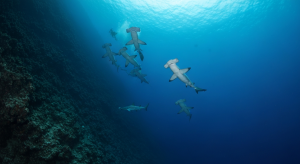
If there is one period that seasoned divers circle on their calendars, it is the autumn window. From mid-September through early December, the conditions in the Banda Sea are sublime. The water temperature hovers at a perfect 28-29°C, and visibility can extend to a phenomenal 40 meters or more. But the real draw is the explosion of marine life. The preceding monsoon season, while disruptive on the surface, has churned up deep, nutrient-rich water, causing a massive plankton bloom. This, in turn, attracts the ocean’s giants. This is unequivocally the best time of year for diving Bandaneira if your goal is encountering large pelagic species. The outer islands of Pulau Ai and Pulau Run become hotspots for schooling scalloped hammerhead sharks. I recall a conversation with Adi, our lead dive guide, who has over 2,000 dives in these waters. “Last October,” he told me, “we dropped in at Karang Hatta and it was a wall of silver. At least fifty, maybe more, hammerheads passed just beyond the reef edge, completely unbothered by our presence.” This is not an isolated story. This is the period when mobula rays, giant trevally, and dogtooth tuna patrol the drop-offs. The sheer biomass is astounding, a direct result of the seasonal oceanic cycle that makes this a critical congregation point for apex predators.
The Spring Shoulder Season (March – May): Clarity and Coral
While autumn may claim the pelagic crown, the spring window from March to May offers its own distinct and compelling advantages. This period is characterized by some of the most crystalline water clarity of the entire year. The seas are exceptionally calm, and the visibility is consistently excellent, often pushing 30 meters. Without the recent plankton bloom of the autumn season, the water is gin-clear, making it an underwater photographer’s dream. This is the ideal time to focus on the Banda Islands’ spectacular reefscapes and unique geological formations. The star of the show is undeniably the Lava Flow dive site. Following the 1988 eruption of Gunung Api, a river of molten rock poured into the sea, sterilizing the seabed. In the 30-plus years since, coral has recolonized the area at a scientifically documented, astonishing rate. What exists today is a sprawling, immaculate garden of table and staghorn corals unlike anything else in the world. This spring season, with its superb light penetration, showcases these vibrant reefs in their full glory. It’s also a fantastic time for spotting macro life. The dusk mandarin fish mating rituals off Banda Neira’s pier are a reliable spectacle, and the calm conditions are perfect for patiently searching for pygmy seahorses and exotic nudibranchs. Our luxury dive charters are specifically timed to coincide with these optimal windows, ensuring you experience the reefs at their most vibrant.
Navigating the “Off-Season”: A Word of Caution
We are often asked if it’s possible to dive in the Banda Islands during the monsoon seasons. The technical answer is yes, but the practical reality is far more complicated. During the peak southeast monsoon from June to August, wind speeds can consistently exceed 25 knots. This creates significant surface chop and large swells, rendering the 6-to-8-hour open-ocean crossings to critical dive areas like the Hatta and Ai island groups unsafe. Most reputable liveaboards, the only way to properly access the best sites, will not even operate in the region during this time. The few local boats that remain are confined to the sheltered waters within the main caldera, missing 90% of what makes bandaneira diving a world-class experience. The northwest monsoon, from January to February, is generally less intense but brings significant rainfall, which creates terrestrial runoff and reduces underwater visibility, sometimes to as low as 10-15 meters. While some diving is possible, it’s a gamble. The very marine biodiversity that supports the Banda Islands’ UNESCO World Heritage tentative listing is best and most reliably observed when the conditions are at their peak. Attempting to visit during the off-season is a false economy; you travel an immense distance only to be denied access to the premier underwater sites that define the destination.
Beyond the Dive Profile: Land-Based Considerations
The magic of the Banda Islands extends far beyond the waterline, and the ideal diving seasons happily coincide with the best time for terrestrial exploration. The dry, sunny weather from September to December and March to May provides perfect conditions for walking the historic streets of Banda Neira, the archipelago’s main town. This is the time to explore the immaculately preserved Fort Belgica, a pentagonal fortress built by the Dutch in 1611, and wander through the ruins of Fort Nassau. The trails that lead through the ancient nutmeg plantations, where the world’s most valuable spice once grew, are dry and easily navigable. For the more adventurous, the signature land excursion is the pre-dawn hike up the 656-meter-high Gunung Api volcano. The trek is challenging, but the panoramic view from the summit at sunrise, overlooking the entire island group, is an unforgettable reward. Attempting this hike during the rainy season can be a slippery and treacherous affair. As per historical records, these islands were the epicenter of global trade for centuries. Planning a complete journey that combines world-class bandaneira diving with this rich cultural immersion is our specialty, and doing so during the dry seasons ensures every aspect of your voyage is as comfortable as it is captivating.
Quick FAQ: Your Bandaneira Diving Questions Answered
What is the water temperature in the Banda Islands?
The water is consistently warm, ranging from 27°C to 30°C (81-86°F) year-round. During the peak diving seasons of March-May and September-December, it averages a very comfortable 28-29°C, making for pleasant, long dives.
Do I need a wetsuit for diving in Bandaneira?
While the water is warm and some divers may use only a rash guard, a 3mm shorty or full-length wetsuit is highly recommended. Over a trip with multiple dives per day, a wetsuit provides essential thermal protection and guards against minor scrapes or stings.
Is Bandaneira suitable for beginner divers?
The Banda Islands are best known for advanced diving due to strong currents at many offshore sites. However, there are numerous sheltered locations within the main caldera, such as the famous Lava Flow site, that are perfect for less experienced divers. It is crucial to travel with an expert operator like Bandaneira Diving Voyages that can tailor the dive plan to accommodate all skill levels safely.
When is the best chance to see hammerhead sharks?
For the highest probability of encountering the famous schooling scalloped hammerheads, you must plan your trip for the autumn window. The absolute prime time is from late September to early November, when nutrient-rich upwellings attract them in large numbers to specific offshore pinnacles and seamounts.
The Banda Sea waits, but its finest moments are fleeting and governed by the ancient rhythm of the monsoons. To witness the schooling hammerheads, to drift over immaculate coral gardens in crystalline water, and to explore the Spice Islands under clear, sunny skies requires precise timing. Aligning your voyage with these peak windows is the difference between a good trip and an extraordinary one. To ensure your journey coincides with the absolute best conditions the archipelago has to offer, we invite you to explore our curated bandaneira diving itineraries. Let our team of experts handle the complex logistics, so you can focus on the descent into one of the planet’s last great underwater realms.